Orbital
Infrastructure
Visualization
& Remote Operations
Digital twins, multi-agent AI and immersive teleoperation for the next generation of autonomous orbital infrastructure.
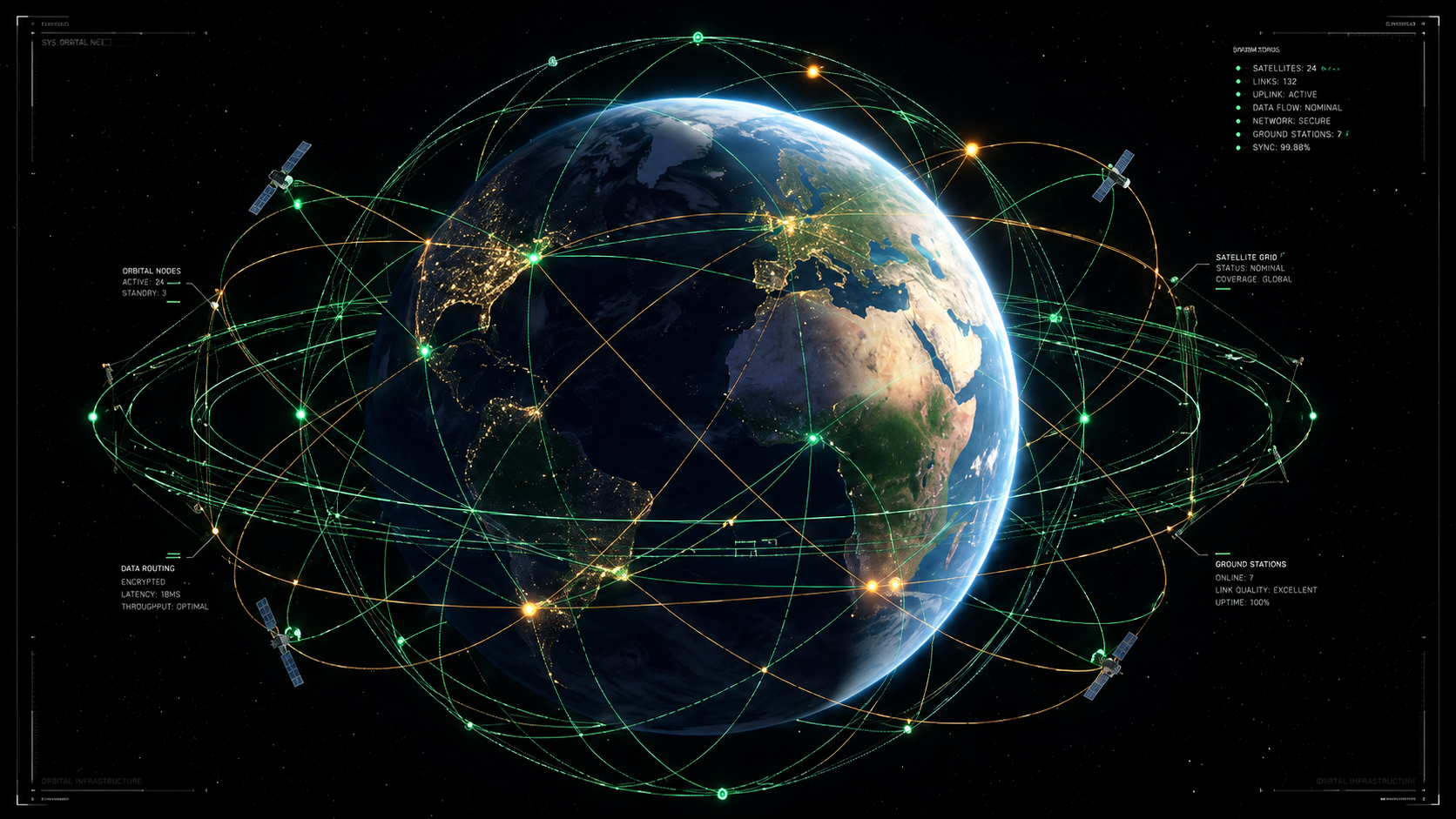
Earth orbit becomes the critical infrastructure layer of the 21st century.
The passive model — monitor, avoid, deorbit — is structurally obsolete. Pyramidas frames orbit as an active infrastructure domain: visualized, synchronized, simulated and operated through digital twins, AI agents and immersive control systems.

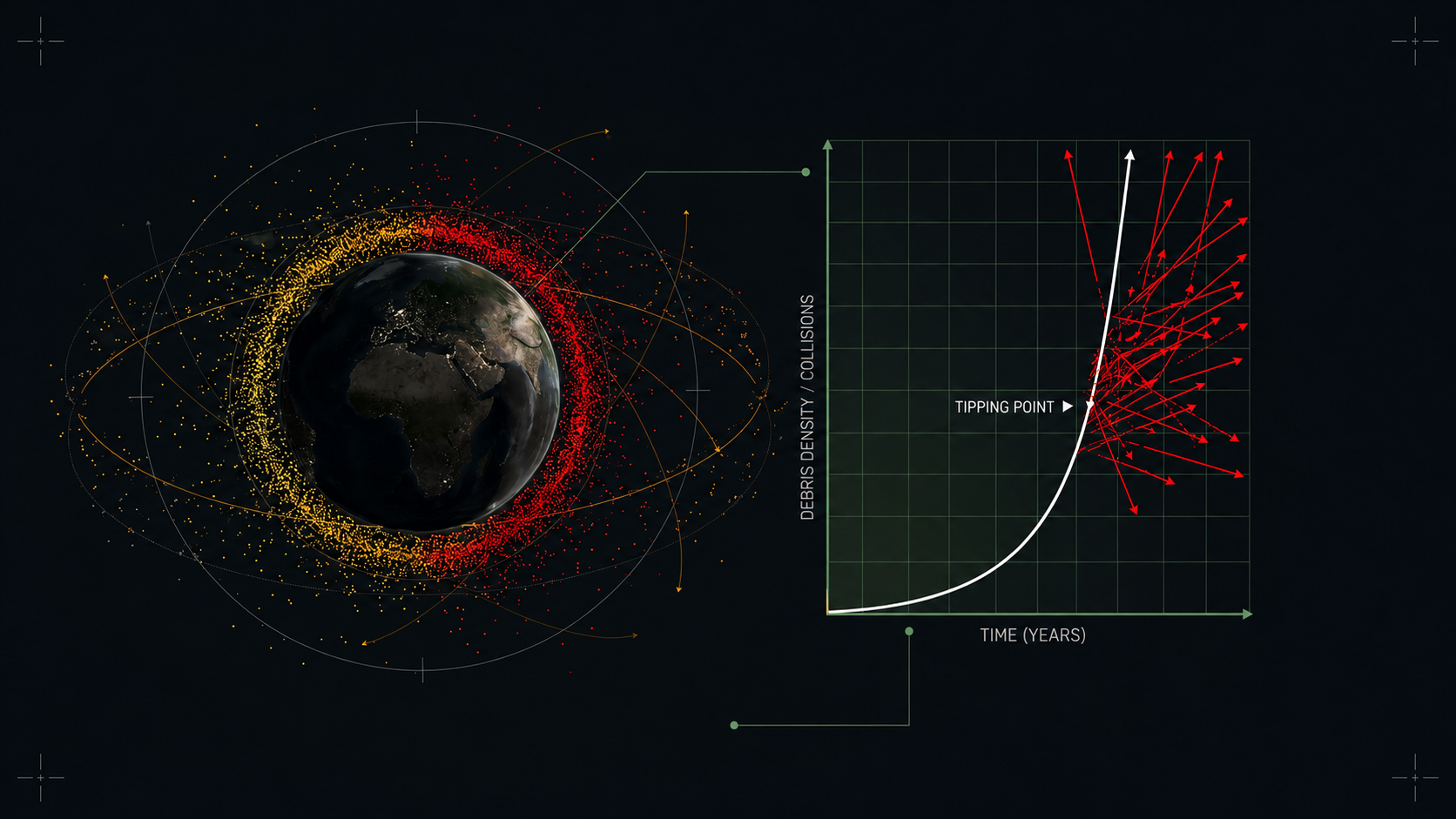
Kessler
Syndrome Threshold
- Micro-fragments remain largely invisible to conventional tracking networks.
- Critical orbital bands concentrate commercial and sovereign infrastructure.
- Impact energy turns centimeter-scale fragments into mission-ending hazards.
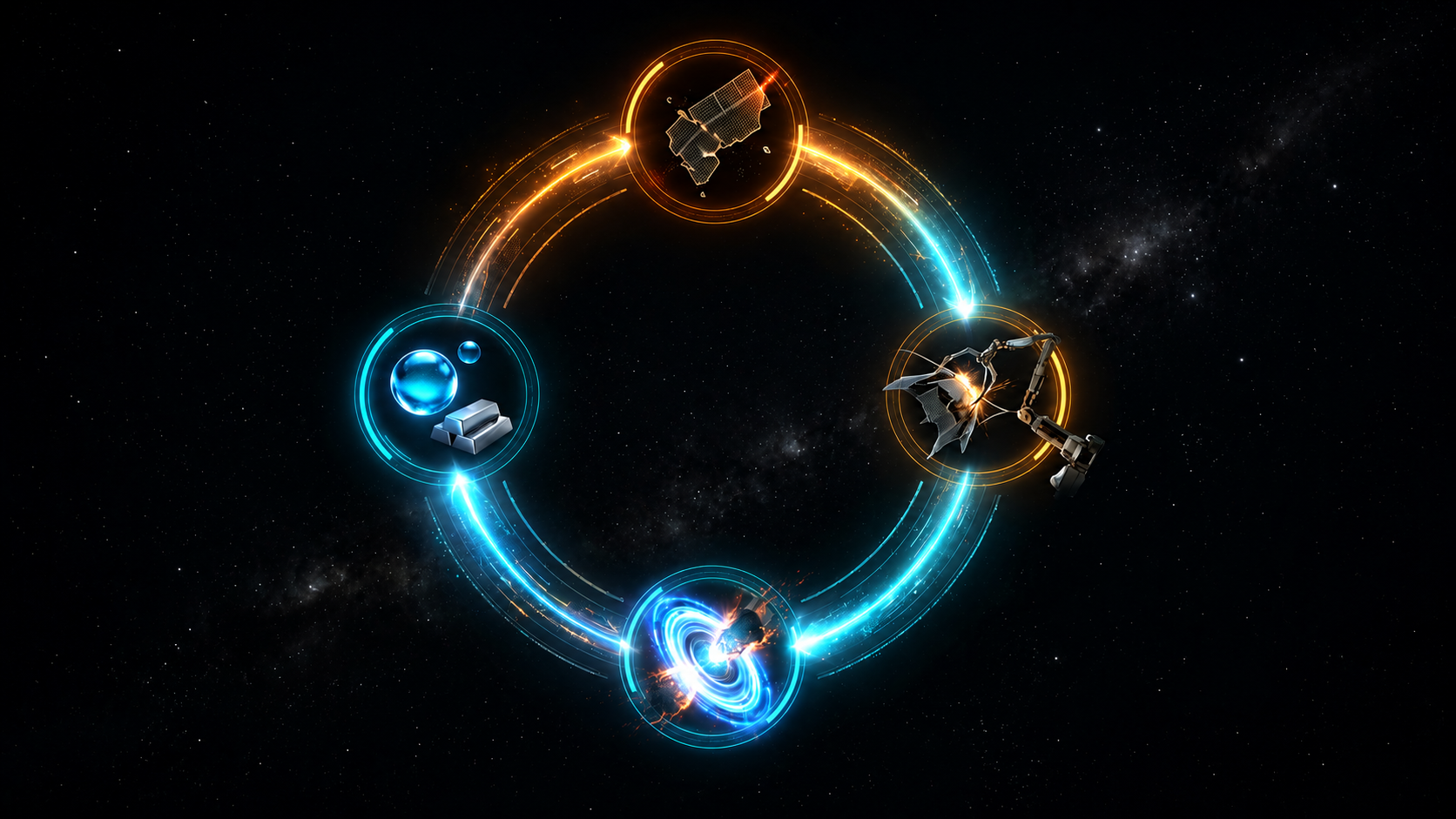


From kinetic risk
to orbital feedstock.
- Active capture reframes debris removal as resource recovery.
- ISRU logic avoids the gravity-well cost of launching every kilogram from Earth.
- Orbital slots become cleared, maintained and monetizable infrastructure.
Physical-digital
symbiosis.
The twin does not merely observe. It simulates, predicts and validates manoeuvres before physical execution — keeping humans on the loop, not in the latency bottleneck.


Autonomous
chaser navigation.
- Teleoperation layer gives operators an FPV-style mission interface.
- AI guidance performs proximity operations against non-cooperative targets.
- Safety constraints are hard barriers, not decorative indicators.
Cooperative
multi-agent fleet.
Single-agent navigation fails at scale. Multi-Agent Reinforcement Learning coordinates fleets of chaser vehicles while preserving collision boundaries and communication resilience.


VIES as the
immersive infrastructure layer.
VIES is not presented here as “metaverse”. It acts as a standardised layer for distributed immersive environments, geospatial synchronization and remote operations interfaces.
- Interoperability between physical assets, digital twins and operator interfaces.
- Real-time layers for telemetry, geospatial states and immersive collaboration.
- Open infrastructure logic instead of closed platform dependency.
Distributed
nervous system.


XR supervision
for critical systems.
The operator environment shifts from manual command execution to orchestral supervision. Humans define constraints, validate exceptions and manage the mission envelope.
- 3D telemetry replaces flat dashboards for spatial decision-making.
- AI triage prioritizes anomalies and intervention windows.
- XR training supports simulated rehearsal before physical operations.
Strategic
Domains
The same stack applies beyond orbit: aerospace, defense, industrial digital twins and smart infrastructures.
Constellation management, active debris removal, inspection and on-orbit servicing.
Situational awareness, protected satellite operations and strategic simulation.
Remote operation frameworks for critical facilities, grids and transport networks.
Geospatial interfaces, XR command rooms and distributed synchronization.
Advanced systems,
not generic 3D.
Pyramidas links real-time visualization, geospatial intelligence, digital twins, XR interfaces and AI-assisted mission design.

Persistent autonomous
orbital infrastructure.
A visual and operational doctrine for systems that must be seen, simulated and controlled before they can be safely deployed.
Explore with Pyramidas →